
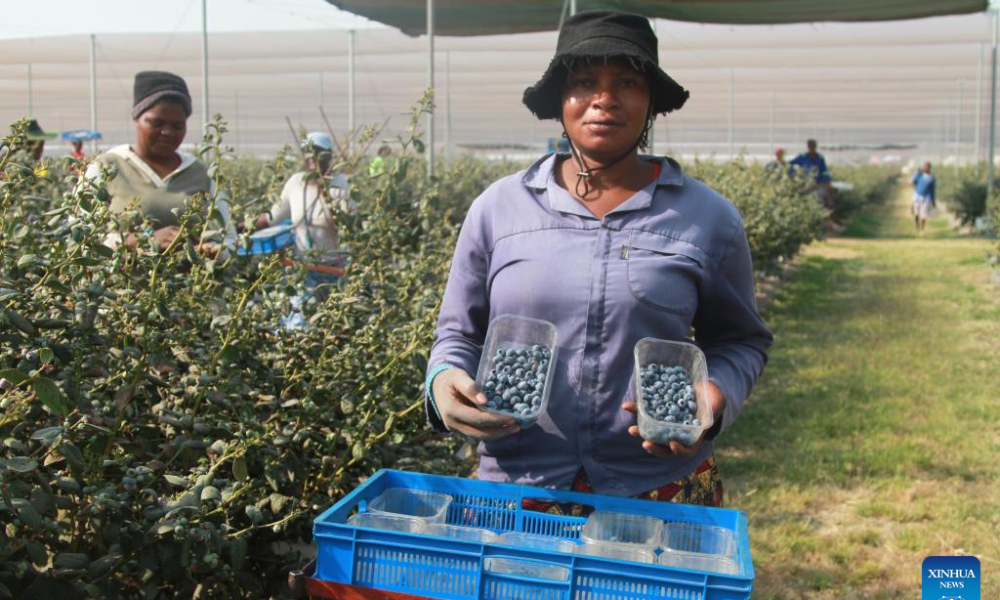
THE rise of blueberries has become one of the most remarkable success stories in African horticulture.
Once considered a niche crop, blueberries are now among the fastest-growing fresh produce exports globally, with demand surging across Europe, the Middle East, Asia and increasingly in North America.
Countries such as South Africa, Morocco, Zimbabwe, Kenya and Zambia are positioning themselves as key suppliers to premium international markets.
Yet, as opportunities expand, so do the requirements for accessing these lucrative markets.
At the centre of modern fresh produce trade stands one certification that has become almost indispensable for commercial exporters: GLOBALG.A.P.
For many blueberry growers entering export markets, GLOBALG.A.P. is not merely a certification – it is a passport to international trade.
Major retailers, supermarkets, importers and food service companies increasingly require suppliers to demonstrate compliance with GLOBALG.A.P. standards before they can even begin commercial discussions.
What Exactly Is GLOBALG.A.P.?
GLOBALG.A.P., short for Global Good Agricultural Practices, is an internationally recognised farm assurance programme that establishes standards for safe, sustainable and responsible agricultural production.
Originally developed by European retailers under the name EurepGAP in the late 1990s, the certification has evolved into one of the world’s most widely accepted agricultural standards.
Today, GLOBALG.A.P. operates in more than 130 countries and covers a broad range of agricultural sectors, including fruit and vegetables, aquaculture, livestock and floriculture.
The certification system focuses on six major impact areas:
• Food safety
• Environmental sustainability
• Worker health, safety and welfare
• Supply chain traceability
• Responsible production practices
• Farm management and legal compliance
For blueberry producers, these standards provide assurance to buyers that the fruit has been produced under carefully controlled conditions that minimise risks to consumers, workers and the environment.
Why GLOBALG.A.P. Matters in the Blueberry Industry
Blueberries are among the most demanding horticultural export products.
They are highly perishable, premium-priced and destined primarily for consumers who expect consistent quality and food safety.
European retailers in particular regard GLOBALG.A.P. certification as a minimum requirement for sourcing fresh berries.
Exporters seeking access to supermarket supply chains often discover that certification is not optional but mandatory.
As global competition intensifies, certification has become a key differentiator.
Producers without recognised food safety systems face significant challenges when competing against certified suppliers from South Africa, Peru, Chile, Morocco and Spain.
The rapid expansion of certified blueberry production in emerging markets demonstrates this reality.
Industry observers note that growers increasingly pursue GLOBALG.A.P. certification specifically to unlock export opportunities and strengthen buyer confidence.
Key Requirements for Blueberry Farms
Achieving certification involves far more than passing a once-off inspection.
It requires the implementation of a comprehensive farm management system.
For blueberry operations, auditors typically examine several critical areas:
• Traceability: Every berry harvested must be traceable back to its production block. Farms are required to maintain detailed records of planting material, fertiliser applications, pesticide use, irrigation schedules and harvest activities.
• Food Safety: Growers must demonstrate effective measures to prevent contamination during production, harvesting, handling and storage. Water quality management, chemical application controls and hygiene protocols are particularly important.
• Pesticide Management: Blueberry exporters face increasing scrutiny regarding maximum residue levels (MRLs). Certification requires strict monitoring and documentation of crop protection products to ensure compliance with international market standards.
• Environmental Stewardship: Auditors assess how farms manage soil health, biodiversity, waste disposal, water resources and environmental risks. Sustainable farming practices are becoming increasingly important to international buyers.
• Worker Welfare: Employee health, safety and welfare are core components of certification. Farms must provide adequate training, protective equipment, sanitation facilities and safe working conditions. Many exporters also pursue the GRASP add-on, which focuses specifically on social responsibility and labour practices.
The Certification Journey
Obtaining GLOBALG.A.P. certification generally follows several stages.
A producer first registers with an approved certification body.
The farm then conducts a self-assessment to identify areas requiring improvement before implementing the necessary management systems and record-keeping procedures.
An independent third-party audit follows, during which inspectors evaluate compliance with the standard’s requirements.
Successful farms receive certification, which must be renewed annually through repeat audits.
While the process can appear daunting, many growers report that certification ultimately improves operational efficiency and strengthens management discipline across the business.
Challenges for Zimbabwean Growers
For Zimbabwe’s emerging blueberry industry, GLOBALG.A.P. certification presents both an opportunity and a challenge.
The investment required can be substantial, particularly for small and medium-scale growers.
Costs may include consultant support, infrastructure upgrades, staff training, documentation systems and audit fees.
Record keeping remains one of the most common stumbling blocks.
Many farms produce high-quality fruit but struggle to demonstrate compliance through documented evidence.
Water management is another increasingly important issue.
International buyers are placing greater emphasis on sustainable irrigation practices, especially as climate change places pressure on water resources across Southern Africa.
However, industry experts argue that certification should be viewed as an investment rather than an expense.
Farms that adopt GLOBALG.A.P. systems often experience improvements in productivity, operational control and market access that outweigh the initial costs.
Beyond Certification: Building Market Confidence
Increasingly, international buyers are seeking more than basic certification.
Many prefer suppliers that combine GLOBALG.A.P. certification with additional standards covering social responsibility, environmental sustainability and supply chain management.
Packhouses and exporters may also require certifications such as BRCGS, IFS or other Global Food Safety Initiative (GFSI)-recognised standards to satisfy retailer requirements.
For Zimbabwean blueberry exporters aiming to compete with established suppliers from Peru, Chile, Morocco and South Africa, certification is becoming part of a broader quality assurance strategy rather than a standalone achievement.
Future of African Blueberry Exports
Africa’s blueberry industry is entering an exciting phase of growth.
Strong climatic advantages, favourable production windows and increasing investment are positioning the continent as a significant supplier to global markets.
Yet the future belongs to producers who can consistently deliver safe, traceable and responsibly produced fruit.
GLOBALG.A.P. certification has become the international language of trust in fresh produce trade.
For Zimbabwean growers seeking to expand their presence in premium export markets, understanding and implementing GLOBALG.A.P. standards may prove to be one of the most important business decisions they make.
In the increasingly competitive world of blueberries, certification is no longer just about compliance – it is about credibility, competitiveness and long-term sustainability.

No comments