
Why Water Management Is Becoming a Competitive Advantage in Blueberry Exports
ON a commercial blueberry farm, the difference between a profitable export harvest and a disappointing season may come down to something most consumers never see: how water reaches the plant.
As Africa’s fresh produce sector expands and competition in international markets intensifies, growers are under increasing pressure to produce larger yields, superior fruit quality and consistent supplies while using fewer resources.
Water, once considered merely an input, has become a strategic asset.
Nowhere is this more evident than in blueberry production.
One of the continent’s fastest-growing export crops, blueberries demand precise water management throughout the production cycle.
Even short periods of water stress can affect berry size, firmness and shelf life, while excessive irrigation can damage roots, encourage disease and compromise fruit quality.
For producers in Zimbabwe and across Africa, the choice between drip irrigation and conventional irrigation is therefore about much more than irrigation infrastructure.
It is a decision that influences productivity, sustainability, production costs and access to premium export markets.
As the industry seeks to maximise every hectare and every litre of water, drip irrigation is increasingly emerging as the preferred system for modern blueberry production.
But does that mean conventional irrigation has become obsolete?
Understanding the strengths and limitations of both approaches is essential for growers looking to remain competitive in a rapidly evolving global marketplace.
Understanding the Two Systems
Conventional irrigation systems typically apply water over a broader area using overhead sprinklers, micro-sprinklers or surface irrigation methods.
These systems have historically been popular because they are relatively simple to install and can cover large areas quickly.
Drip irrigation, by contrast, delivers water directly to the root zone through a network of pipes, valves and emitters.
Water is applied slowly and precisely, allowing growers to match irrigation more closely to crop requirements.
While both systems can successfully grow blueberries, the economics and performance outcomes differ significantly.
Why Blueberries Demand Precision
Unlike many fruit crops, blueberries possess a shallow and highly sensitive root system.
The plants require consistently moist but well-drained growing conditions and are particularly vulnerable to both drought stress and waterlogging.
This creates a narrow irrigation margin for error.
Too little water can reduce berry size, affect fruit firmness and lower yields.
Too much water can deprive roots of oxygen, increase disease pressure and negatively affect plant performance.
Commercial growers therefore need a system capable of delivering small, frequent and highly controlled irrigation events.
That requirement increasingly favours drip irrigation.
Water Efficiency: The Defining Advantage
For export-oriented producers operating in water-constrained environments, efficiency has become the most compelling argument for adopting drip technology.
Studies indicate that drip irrigation can use substantially less water than sprinkler-based systems because water is delivered directly to the plant root zone, reducing evaporation and runoff losses.
The Food and Agriculture Organisation notes that drip systems can achieve irrigation efficiencies of up to 95 percent while using 30-50 percent less water than traditional surface irrigation methods.
Industry research in blueberry production suggests water savings can be even greater when compared with sprinkler systems, with some commercial systems using 45-60 percent less water.
For Zimbabwean growers facing increasing pressure on water resources and rising energy costs associated with pumping, those savings translate directly into improved margins.
Yield and Fruit Quality
Water savings alone are not enough to justify investment in modern irrigation systems.
The ultimate question for growers is whether precision irrigation improves production.
Research on highbush blueberries has shown that drip irrigation can support vigorous plant growth while using considerably less water than alternative irrigation methods.
The benefits extend beyond yield.
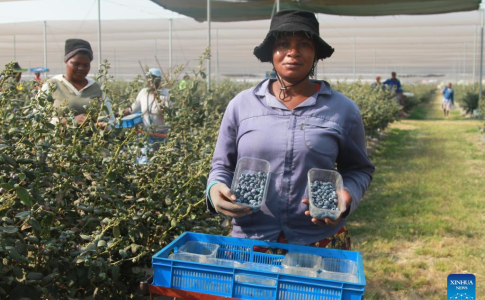
Export markets reward fruit that is large, firm, uniform and capable of withstanding long-distance transportation.
Consistent moisture management helps reduce plant stress during critical fruit development stages, contributing to improved berry size and quality.
In Zimbabwe, commercial producers adopting precision irrigation technologies report improvements in both yield consistency and export-grade fruit quality.
Fertigation: Feeding Through the Irrigation System
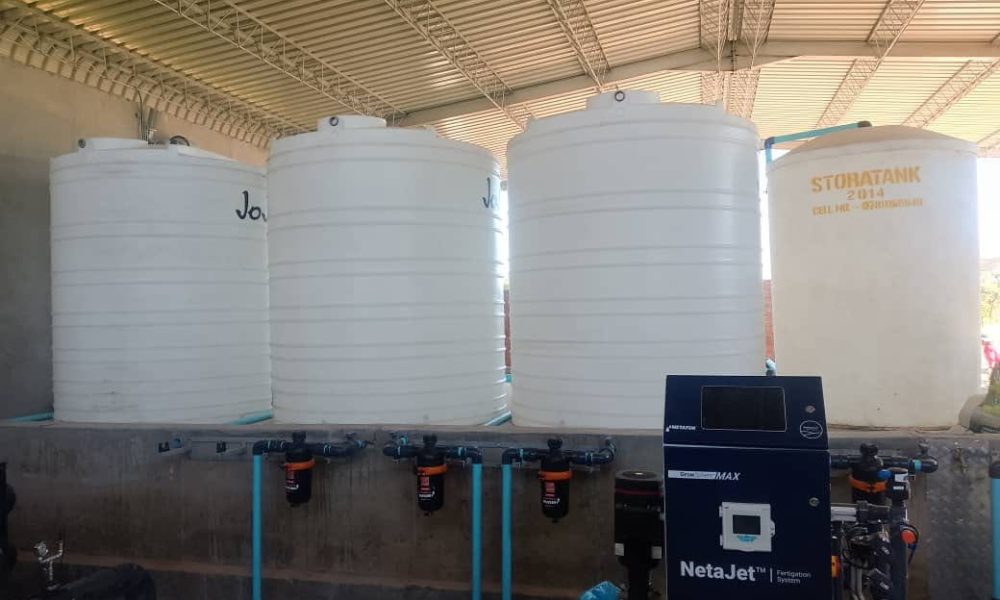
One of the most significant advantages of drip irrigation is its compatibility with fertigation – the practice of applying nutrients through irrigation water.
Blueberries require carefully managed nutrition programmes throughout the growing season.
Drip systems allow growers to apply small, targeted doses of fertiliser directly to the active root zone, improving nutrient uptake and reducing wastage.
This level of precision is particularly valuable for export producers seeking to maximise yields while controlling fertiliser costs and minimising environmental impact.
Modern commercial blueberry farms often integrate irrigation, fertigation and soil acidity management into a single system, enabling real-time adjustments based on crop requirements.
Disease Management Benefits
Another often-overlooked advantage relates to plant health.
Overhead irrigation systems wet leaves, stems and fruit during application.
While this can provide certain agronomic benefits, prolonged moisture on plant surfaces may create favourable conditions for fungal diseases.
Drip irrigation avoids wetting the canopy by delivering water directly to the soil around the plant roots.
This can help reduce disease pressure and improve fruit quality, particularly during periods of high humidity or rainfall.
For exporters, fewer disease-related defects mean higher pack-out percentages and improved market returns.
Challenges of Drip Irrigation
Drip irrigation is not without limitations.
The systems require higher initial investment, careful design and ongoing maintenance.
Emitters can become blocked if filtration systems are inadequate or water quality is poor.
Growers also need technical expertise to manage irrigation scheduling, fertigation programmes and system maintenance effectively.
Nevertheless, many commercial producers view these challenges as manageable when compared with the long-term benefits.
What This Means for Zimbabwe’s Blueberry Industry
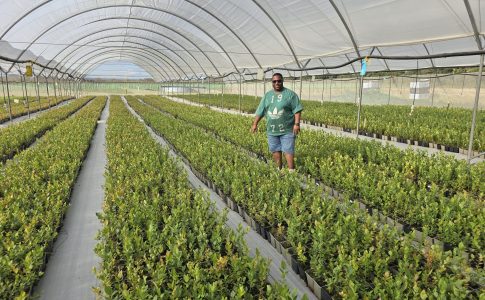
Zimbabwe has rapidly established itself as one of Africa’s most promising blueberry-exporting nations.
With export markets demanding high-quality fruit and increasing scrutiny on sustainability credentials, irrigation efficiency is becoming a strategic issue rather than merely an operational one.
Modern blueberry production relies heavily on precise water management because the crop’s shallow root system leaves little room for error.
As competition intensifies from established exporters such as Morocco, South Africa and Peru, Zimbabwean growers who invest in precision irrigation technologies may gain an important competitive advantage through lower water use, improved fruit quality and greater production consistency.
The Bottom Line
The debate between drip and conventional irrigation is no longer simply about how to water a crop.
For Africa’s export-oriented blueberry industry, it is increasingly a question of how to produce more marketable fruit using fewer resources.
Conventional irrigation systems still have a role to play, particularly where capital constraints exist or frost protection is required.
However, for commercial blueberry producers targeting premium export markets, the evidence increasingly points toward drip irrigation as the system best aligned with the future of sustainable, high-value berry production.
In an era where every litre of water and every kilogramme of export-grade fruit matters, precision irrigation may prove to be one of the most important investments a grower can make.

No comments