
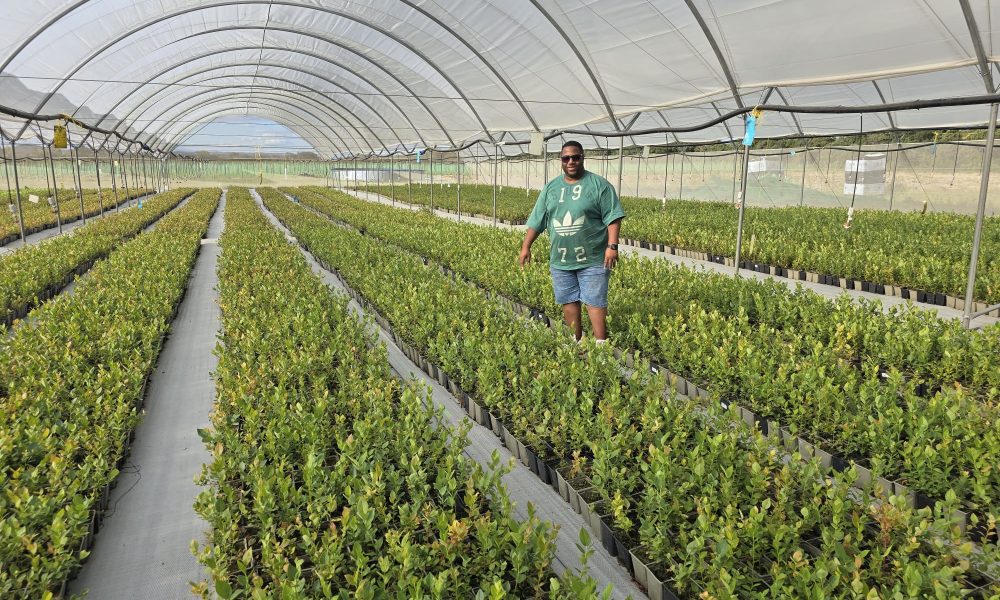
THE rapid rise of Zimbabwe’s blueberry industry is transforming the country into one of Africa’s fastest-growing berry exporters, attracting investors seeking opportunities in premium horticultural exports.
Yet behind the impressive export figures lies a stark reality: blueberries are among the most expensive crops to establish on a commercial scale.
Industry estimates suggest that establishing one hectare of export-grade blueberries in Zimbabwe requires an investment ranging between US$70 000 and US$150 000, depending on the production system, variety selection, irrigation infrastructure and post-harvest requirements.
For many growers, blueberries represent a long-term investment rather than a quick-return crop.
While plants can begin producing fruit in their first year, meaningful commercial yields are typically achieved from the third year onwards.
Unlike traditional field crops, blueberries require highly specialised production systems designed to meet strict export standards demanded by European, Middle Eastern and increasingly Asian markets.
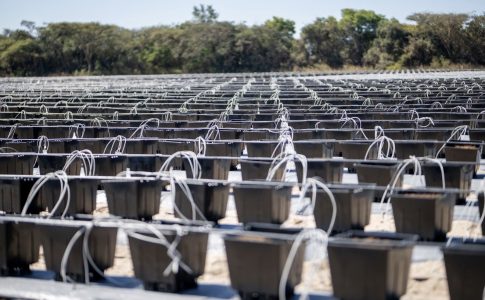
Most commercial farms use imported varieties, substrate-based production systems, drip irrigation, fertigation technology, protective netting and sophisticated cold-chain logistics.
The result is a crop that demands significant upfront capital but offers access to premium international markets during periods when global supply is limited.
While costs vary between farms and production models, a typical one-hectare establishment budget may look as follows:
| COST ITEM | ESTIMATED COST (US$) |
| Imported planting material | 20 000 – 35 000 |
| Pots, grow bags and substrate | 10 000 – 20 000 |
| Land preparation and drainage | 3 000 – 8 000 |
| Drip irrigation and fertigation systems | 8 000 – 15 000 |
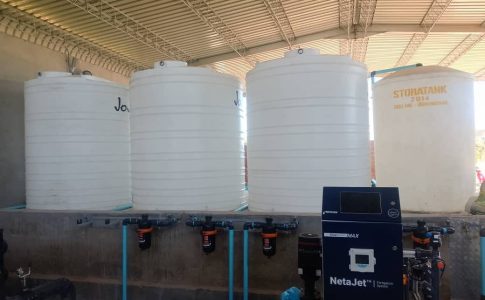
| Water storage infrastructure | 5 000 – 10 000 |
| Shade netting and support structures | 15 000 – 30 000 |
| Labour for establishment | 3 000 – 8 000 |
| Fertilisers and crop protection | 2 000 – 5 000 |
| Packhouse contribution and handling infrastructure | 5 000 – 15 000 |
| Miscellaneous and contingency costs | 4 000 – 10 000 |
| Estimated Total | 70 000 – 150 000 |
Industry participants note that the final figure depends largely on whether growers build dedicated infrastructure or share facilities through contract farming arrangements.
Planting material remains one of the largest expenses.
Commercial blueberry farms typically establish between 5 500 and 7 000 plants per hectare, depending on the variety and production system.
Many of these plants are imported under licence from international breeders, increasing establishment costs substantially.
Growers also pay royalties for certain proprietary varieties developed specifically for export markets where fruit size, flavour, shelf life and harvest timing are critical.
Water infrastructure is another major investment.
Blueberries are highly sensitive to moisture stress and require precise irrigation throughout the season.
Industry sources estimate that each plant can require around five litres of water per day during peak production periods.
This makes reliable boreholes, reservoirs, pumps and fertigation systems essential components of any commercial operation.
Increasingly, Zimbabwean producers are investing in precision irrigation technologies to improve water-use efficiency and maintain fruit quality demanded by export buyers.
The profitability equation depends on yields, fruit quality and market timing.
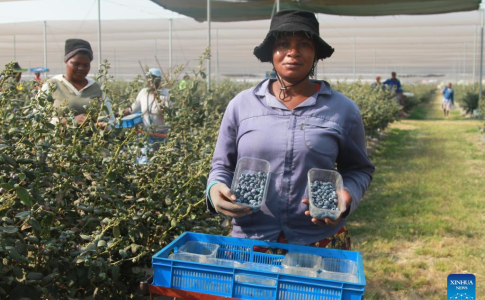
Well-managed orchards can achieve mature yields ranging from 12 tonnes to more than 30 tonnes per hectare depending on variety and management practices.
Recent industry reports indicate that many Zimbabwean producers are now achieving yields between 13 and 22 tonnes per hectare, with further improvements expected as newer varieties mature.
Export windows remain one of Zimbabwe’s strongest competitive advantages.
The country supplies berries to international markets during periods when northern hemisphere production is low, allowing growers to capture premium prices.
Despite strong global demand, access to long-term finance remains one of the industry’s greatest challenges.
Most commercial banks require collateral that many farmers cannot provide, while the perennial nature of blueberry production demands patient capital with repayment periods extending beyond the first harvest years.
Industry leaders have repeatedly argued that the lack of affordable long-term funding is slowing indigenous participation in the sector.
As a result, many growers rely on self-financing, private equity partnerships or contract farming arrangements with export companies.
The industry’s growth has been remarkable.
Zimbabwe’s blueberry hectarage has expanded rapidly over the past decade, with the country now producing thousands of tonnes annually for export.
New market opportunities, including access to China, are expected to accelerate investment further.
Industry estimates place current blueberry plantings at around 550 hectares, with expansion continuing as investors seek exposure to one of the continent’s fastest-growing horticultural export sectors.
Blueberries are not a crop for undercapitalised farmers.
Establishing one hectare can require an investment equivalent to a luxury home in many parts of Africa.
However, for growers with access to finance, technical expertise and export markets, the crop offers a pathway into one of the world’s fastest-growing fresh produce categories.
As global demand continues to rise and Zimbabwe strengthens its position as a counter-seasonal supplier, the question is no longer whether blueberries are profitable.
The bigger question is whether enough capital can be mobilised to unlock the next phase of growth in Africa’s emerging blueberry powerhouse.

No comments