
FOR decades, investors looking at Africa tended to focus on mining, telecommunications, banking and energy.
Agriculture was often viewed as a high-risk sector associated with weather shocks, fragmented supply chains and low margins.
That perception is changing rapidly.
Across Africa, export-oriented agriculture – particularly fresh fruits, vegetables, flowers and nuts – is attracting growing attention from institutional investors, private equity firms, agribusiness companies and development finance institutions.
From blueberries in Zimbabwe and avocados in Kenya to citrus in South Africa and mangoes in West Africa, investors are increasingly viewing horticultural exports as one of the continent’s most promising growth sectors.
The reasons are simple: rising global demand, attractive returns, foreign currency earnings, expanding market access and the ability to create value across entire supply chains.
Globally, consumers are eating more fresh produce than ever before.
Demand for healthy foods, year-round availability and changing dietary preferences have transformed international food markets.
This trend has created significant opportunities for countries capable of producing fresh produce during periods when major consuming markets in Europe, the Middle East and Asia cannot meet domestic demand.
African producers are increasingly filling these seasonal gaps, supplying supermarkets with blueberries, citrus, avocados, fine beans, peas, flowers and specialty vegetables.
Africa’s horticultural exports have grown steadily over the past three decades, reflecting a broader shift toward higher-value agricultural products in global trade.
Unlike traditional bulk commodities such as maize, cotton or tobacco, fresh produce exports typically generate higher revenues per hectare and offer stronger opportunities for value addition.
One of the strongest attractions for investors is the ability of export agriculture to generate hard currency.
In many African economies, foreign exchange shortages remain a major challenge.
Export agriculture provides a direct pathway to earning dollars, euros and pounds through sales into international markets.
For investors, this creates a natural hedge against local currency volatility while improving the financial sustainability of agricultural businesses.
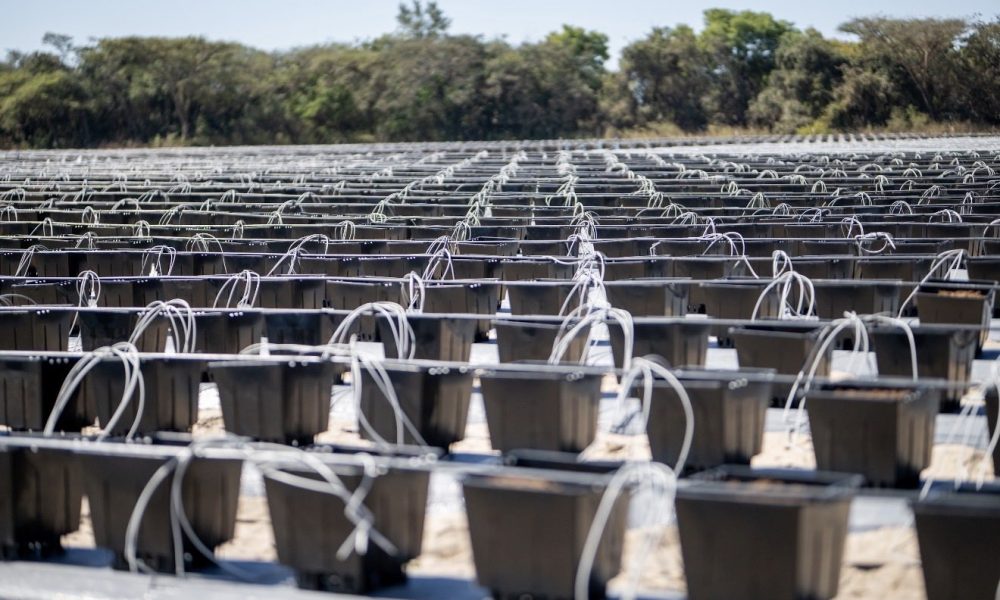
In Zimbabwe, for example, fresh produce exports have rebounded significantly over recent years, with investment flowing into products such as blueberries and macadamia nuts that enjoy strong international demand.
The industry is targeting substantial export growth over the coming decade.
The COVID-19 pandemic, geopolitical tensions and climate-related disruptions exposed vulnerabilities in global food supply chains.
As a result, international retailers and food companies are increasingly diversifying their sourcing strategies.
Africa is benefiting from this shift.
European retailers are actively seeking new and diversified suppliers of fruits and vegetables, while growing demand in the Middle East and Asia is creating additional market opportunities.
Studies of African horticulture indicate that demand for fresh produce imports continues to expand as consumers seek year-round availability and a wider variety of products.
For investors, this means export markets are not only growing but becoming more receptive to new suppliers that can consistently meet quality and food safety standards.
Export agriculture is no longer simply about farming.
Modern horticultural businesses depend on irrigation systems, packhouses, cold storage facilities, logistics networks, quality certification, traceability systems and digital technologies.
Every link in this value chain presents investment opportunities.
An investor may choose to finance primary production, but equally attractive opportunities exist in cold-chain logistics, packaging, export marketing, freight services, processing facilities and agricultural technology.
This integrated ecosystem allows investors to participate in multiple revenue streams while reducing exposure to production risks alone.
Africa possesses one of its greatest competitive advantages in agriculture: climate diversity.
From the highlands of East Africa to the subtropical regions of Southern Africa, many production zones can grow crops during periods when European and North American producers are out of season.
This ability to supply fresh produce during critical market windows often translates into premium prices.
Countries such as Kenya, South Africa, Morocco, Egypt and Zimbabwe have built export industries around exploiting these seasonal advantages.
Their success demonstrates that geography can be a significant commercial asset when supported by modern production systems and efficient logistics.
The image of agriculture as a low-tech industry is increasingly outdated.
Today’s export farms employ precision irrigation, satellite monitoring, drone technology, climate-controlled greenhouses, digital traceability systems and advanced post-harvest handling techniques.
Technology is helping producers improve yields, reduce waste and comply with increasingly stringent international standards.
For investors, this technological transformation enhances productivity while creating opportunities for scalable business models.
Agricultural technology companies are becoming critical partners in the export agriculture value chain, further increasing the sector’s appeal to investment capital.
Environmental, Social and Governance (ESG) considerations are increasingly influencing investment decisions worldwide.
Export agriculture aligns with many of these priorities.
Well-managed horticultural projects create employment, support rural development, empower women and youth, generate export earnings and stimulate economic growth in underserved regions.
Development finance institutions and impact investors are increasingly directing capital toward agricultural projects that combine commercial returns with measurable social impact.
This growing pool of ESG-focused capital is providing additional momentum for investment across Africa’s fresh produce sector.
Zimbabwe is emerging as one of Southern Africa’s most closely watched horticultural growth stories.
The country possesses fertile soils, favourable climatic conditions, experienced farmers and access to regional and international markets.
Blueberries, citrus, flowers, avocados, peas and specialty vegetables are increasingly attracting investor interest.
Industry leaders believe the sector has the potential to grow several times its current size if constraints related to financing, policy consistency and infrastructure are addressed.
As global demand for fresh produce continues to rise, Zimbabwe’s export agriculture sector could become an increasingly important source of foreign investment, employment and economic growth.
Investors are looking at export agriculture because the fundamentals are becoming difficult to ignore.
Global demand is growing.
Supply chains are diversifying.
Fresh produce commands higher values than traditional commodities.
Technology is improving efficiency.
Sustainability objectives are aligning with commercial opportunities.
For Africa, export agriculture is no longer simply a farming story.
It is an investment story.
And for countries capable of producing world-class fruits and vegetables, the opportunity extends far beyond the farm gate – to logistics, processing, technology, infrastructure and international trade.
In an era defined by food security concerns, climate adaptation and global supply chain realignment, export agriculture is increasingly being viewed not as a niche sector, but as a strategic growth industry.


No comments